
DuckDB and Redis Workflows via Plugins
Tabularis is worth considering if your database workflow does not stop at the classic PostgreSQL/MySQL/SQLite trio.
For teams that also touch DuckDB, Redis, or other engines, the plugin system matters because it opens a path to support broader workflows without abandoning the same desktop environment.
Why consider it
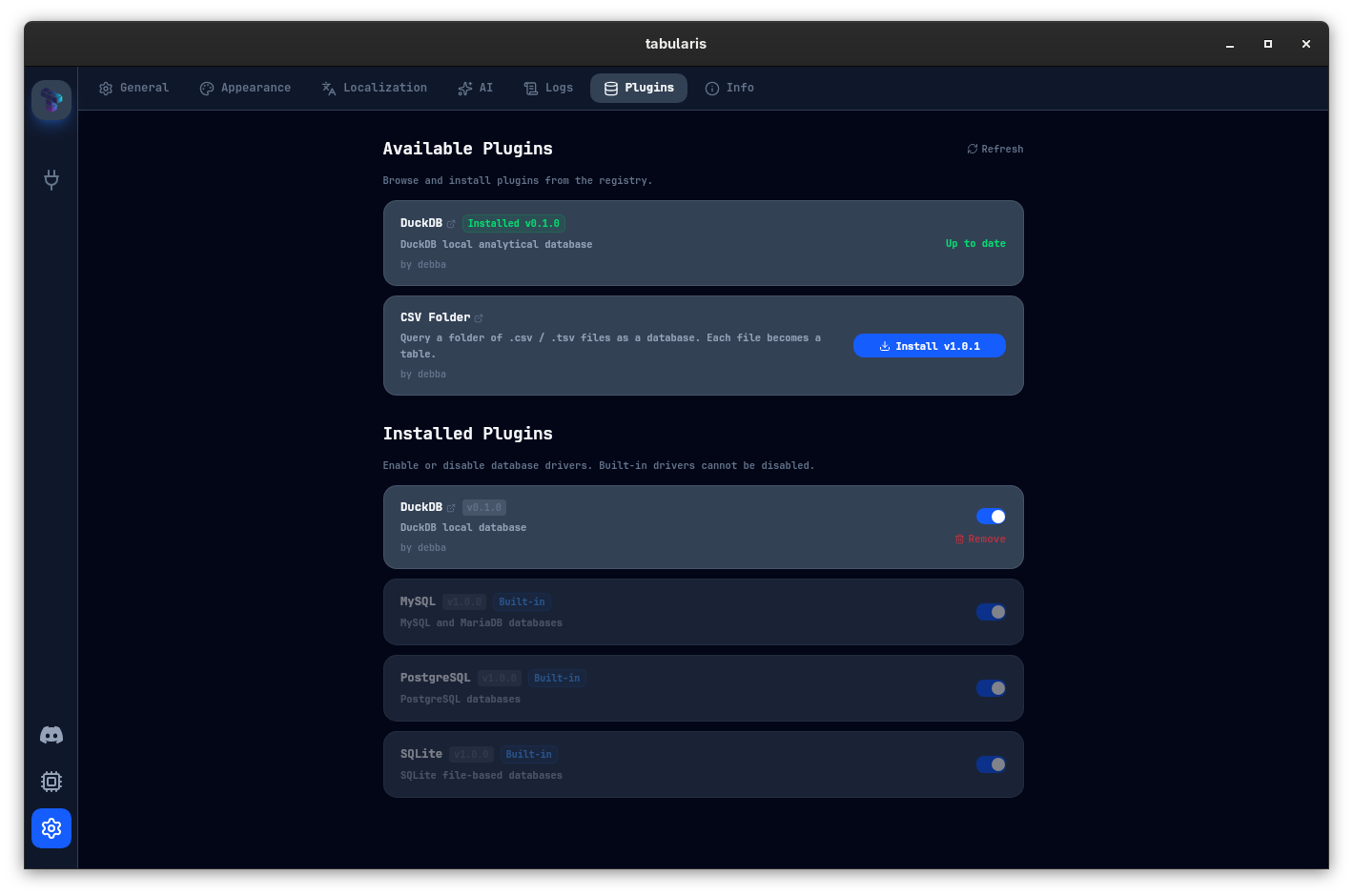
Mixed-stack teams often end up with too many tools:
- one client for relational work
- another for analytics
- another for key-value or cache-oriented systems
That fragmentation hurts more than it seems. It slows down exploration, breaks habits, and makes repeatable workflows harder.
Best fit
- teams that use DuckDB for local analytics or file-based workflows
- teams that touch Redis as part of application debugging or operational checks
- developers who want to keep a single desktop workspace while the underlying engines expand
- open-source users who prefer an extensible product over a rigid built-in matrix
Not the best fit
- teams that never move beyond the built-in database engines
- users who want a single-purpose tool for only one niche engine
- organizations that prefer to standardize on separate purpose-built tools for every store
Why this matters for adoption
Extensibility reduces the risk of choosing the wrong database client too early.
Even if your primary workflow is still relational today, plugin support gives you a route to handle analytical or non-traditional systems later without replacing the whole desktop environment.