


Tabularis is worth considering as a DbGate alternative if you want an open-source desktop SQL workspace with a more opinionated product direction around notebooks, plugins, and AI-assisted workflows.
This comparison is more about focus than licensing. Both tools appeal to teams that care about open software. The bigger question is what kind of workflow you want around the database.
Quick answer
Choose Tabularis if you want:
- a more opinionated desktop workflow for developers
- SQL notebooks for reusable analysis
- a stronger product direction around MCP and AI-native workflows
- a product that feels closer to a modern local SQL workspace
Choose DbGate if you want:
- another open-source option with a more established multi-database tooling surface
- a product direction that feels closer to a classic GUI database manager
- an alternative centered more directly on browsing and query operations
Where Tabularis Is Different
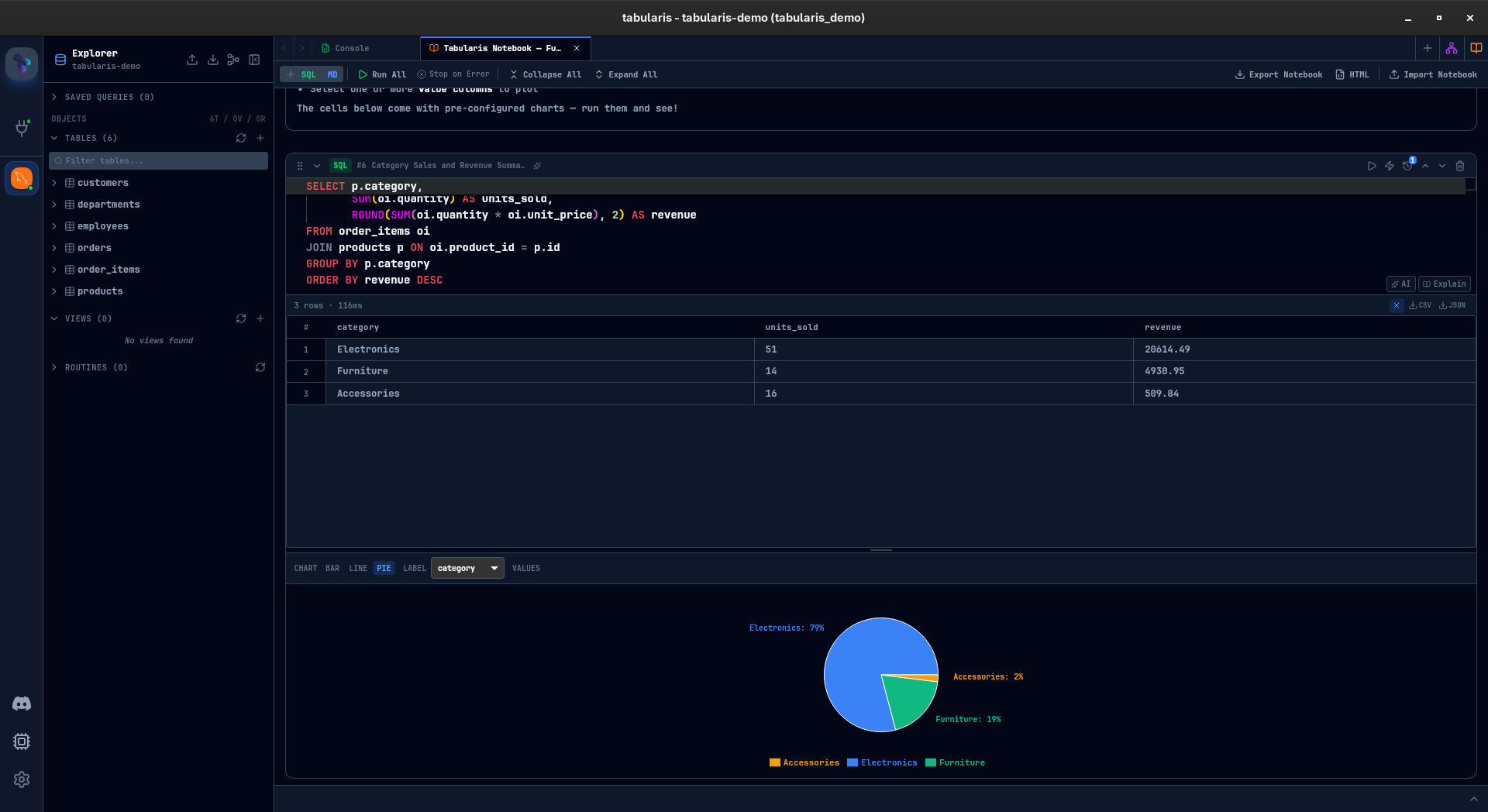
1. Notebooks as a first-class workflow
Tabularis stands out by treating reusable SQL analysis as part of the product, not something that has to live in a separate tool.
2. MCP and AI workflows
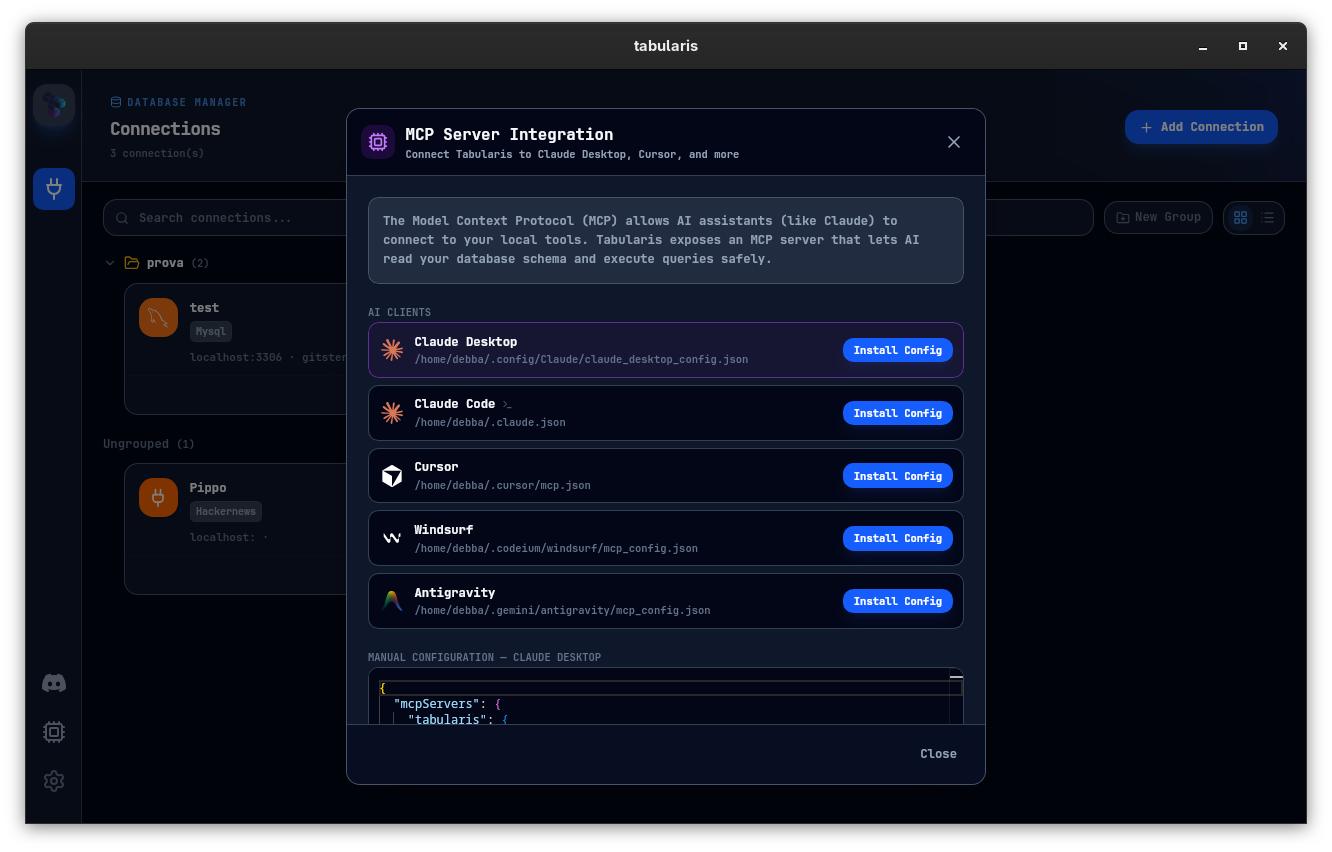
For teams exploring local AI workflows, Tabularis has a clearer story around schema-aware access and MCP-based integration.
3. Product feel
DbGate and Tabularis are both alternatives to heavier legacy tools, but Tabularis is aiming for a more focused, developer-first workspace feel.
Best fit
- teams that want open-source tooling with a newer product direction
- users who care about notebooks and extensibility
- developers who want SQL work and AI-assisted workflows to live closer together
- teams centered on PostgreSQL, MySQL/MariaDB, and SQLite
Not the best fit
- buyers who mainly want a more traditional GUI database manager
- users who do not need notebooks or MCP
- teams already happy with their existing open-source database toolchain
Where DbGate May Still Win
DbGate may still be the stronger fit if your team prefers its existing workflow model and wants continuity with that style of tool rather than a more opinionated workspace concept.
Better evaluation criteria
Use the same live workflow in both tools:
- connect to a real database
- inspect schema and edit a query
- try to turn that work into a reusable analysis flow
That is often enough to show whether the product direction matters for your team.