


Tabularis is worth testing as a Beekeeper Studio alternative if your team wants a broader SQL workspace instead of a tool centered mainly on the core query-and-data-edit loop.
Both products appeal to developers more than traditional enterprise database admin tools. The real difference is in product direction.
Quick answer
Choose Tabularis if you want:
- an open-source SQL workspace with notebooks
- a plugin-based path to extensibility
- a stronger product direction around MCP and AI workflows
- a tool built around local database work that can evolve into reusable analysis
Choose Beekeeper Studio if you want:
- a simpler, familiar developer database client
- a workflow centered mainly on querying and editing data
- a product that feels more focused on the classic desktop DB GUI use case
Where Tabularis Is Different
1. SQL notebooks
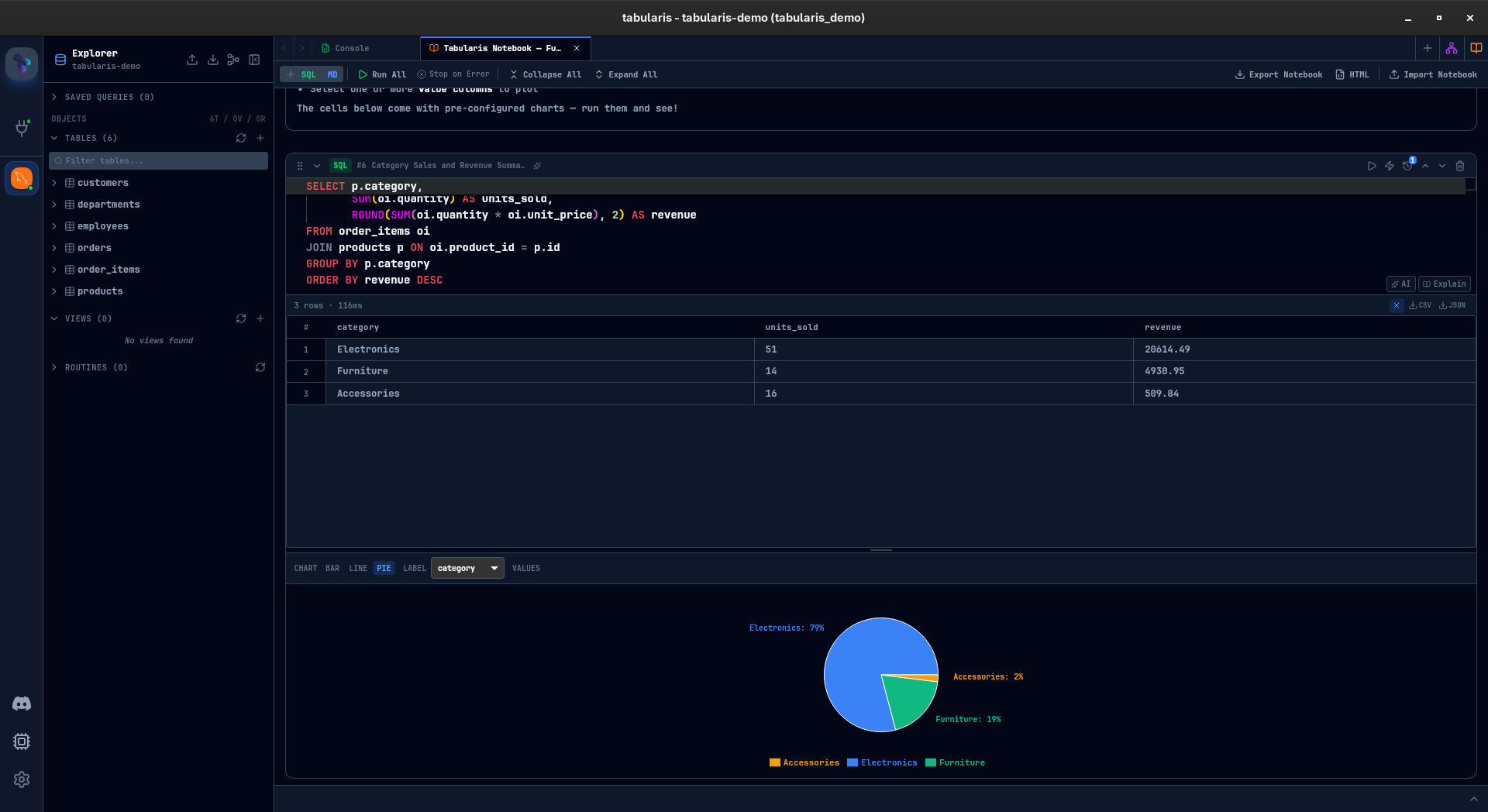
This is one of the clearest differentiators. Tabularis goes beyond tabs and query history with notebooks that combine SQL cells, markdown, charts, and parameters.
2. MCP and AI-native workflows
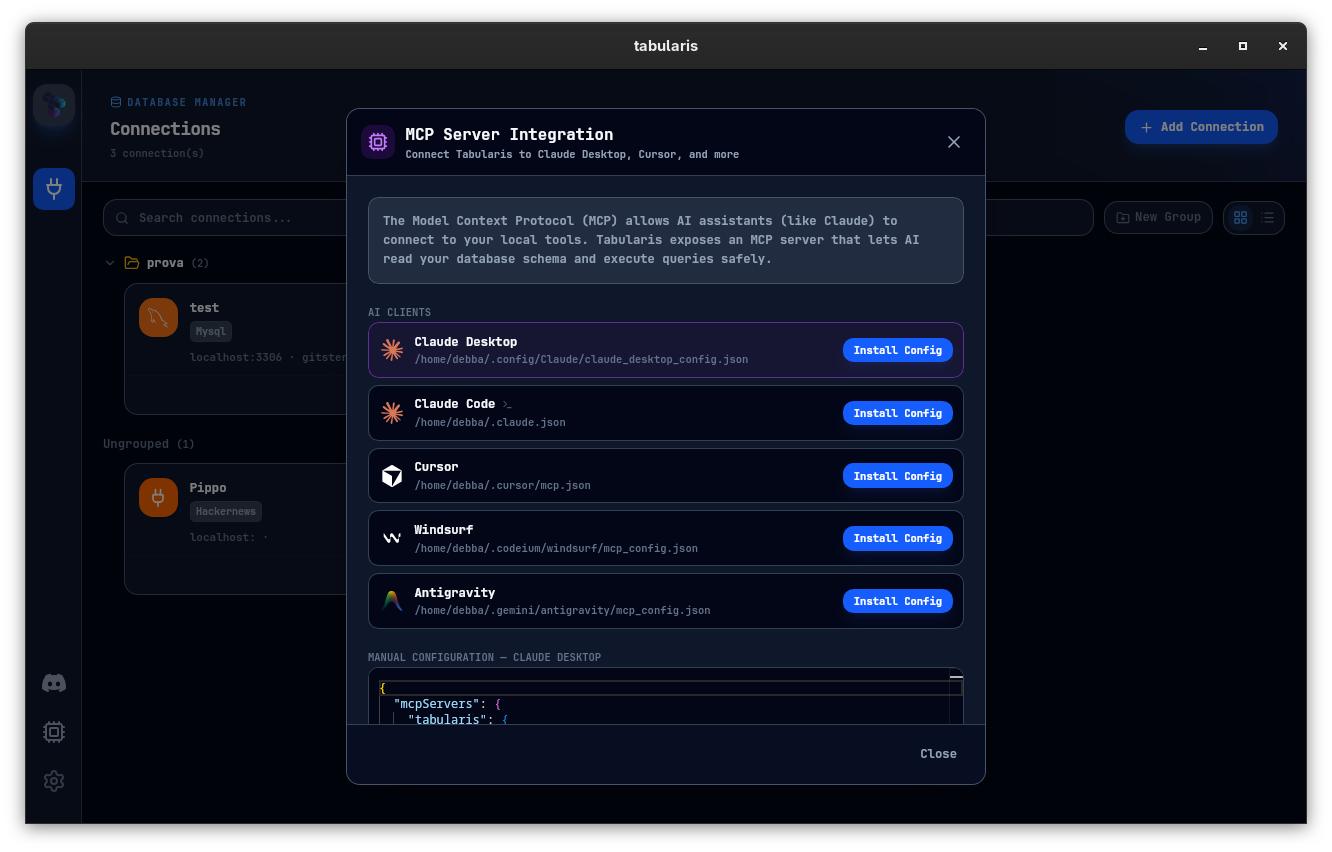
If you are evaluating database tools partly through the lens of local AI-assisted work, Tabularis has a more explicit story through MCP support and schema-aware agent workflows.
3. Plugin extensibility
Tabularis is moving toward a more extensible model for database support and surrounding workflows, which matters if you want the product to grow through plugins and community drivers.
Best fit
- developers who want an open-source alternative with more workflow ambition
- teams interested in reusable SQL analysis, not only query tabs
- users who care about plugins, MCP, or AI-native database workflows
- PostgreSQL, MySQL/MariaDB, and SQLite-heavy teams
Not the best fit
- users who only want a straightforward query-and-edit database client
- teams not interested in notebooks or extensibility
- buyers looking for the simplest possible desktop SQL tool
Where Beekeeper Studio May Still Win
Beekeeper Studio may still be the better fit if your team wants a simpler mental model and does not need the broader workspace direction that Tabularis is pushing toward.
Better evaluation criteria
Run the same short workflow in both tools:
- connect to a staging database — Tabularis can import your saved Beekeeper Studio connections directly (beta), so there is nothing to retype
- perform a multi-step investigation
- decide whether the tool should stop at query execution or support reusable analysis too
That usually reveals the real tradeoff fast.