Tabularis has been accepted into the SignPath.io open source program: a free code signing certificate from the SignPath Foundation for our Windows releases. Over the next few weeks we'll wire signing into the release pipeline — and then the days of telling users to click 'More info → Run anyway' are over.
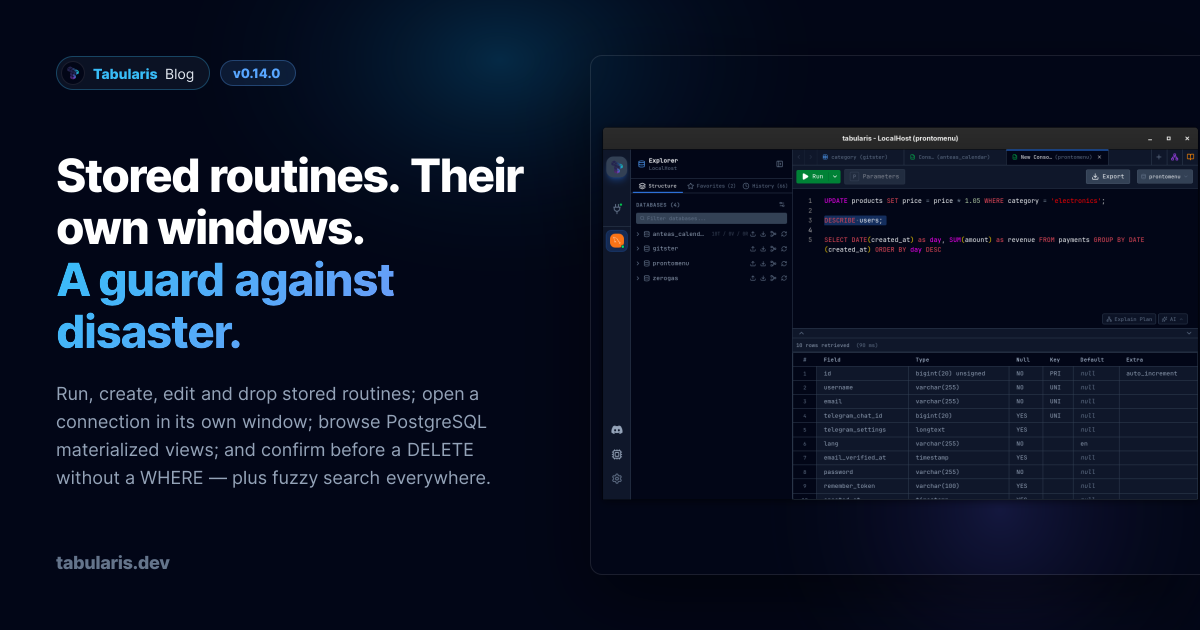
v0.14.0 opens the 0.14 line: manage stored procedures and functions from the sidebar, pop a connection into its own window, browse PostgreSQL materialized views, and get a confirmation dialog before a DELETE without a WHERE — plus typo-tolerant fuzzy search everywhere and a stack of Postgres/MySQL correctness fixes.
JetBrains accepted Tabularis into its Open Source Support program and handed the maintainers a free All Products Pack — which means the editor we write Tabularis in is now, technically, invested in Tabularis existing.
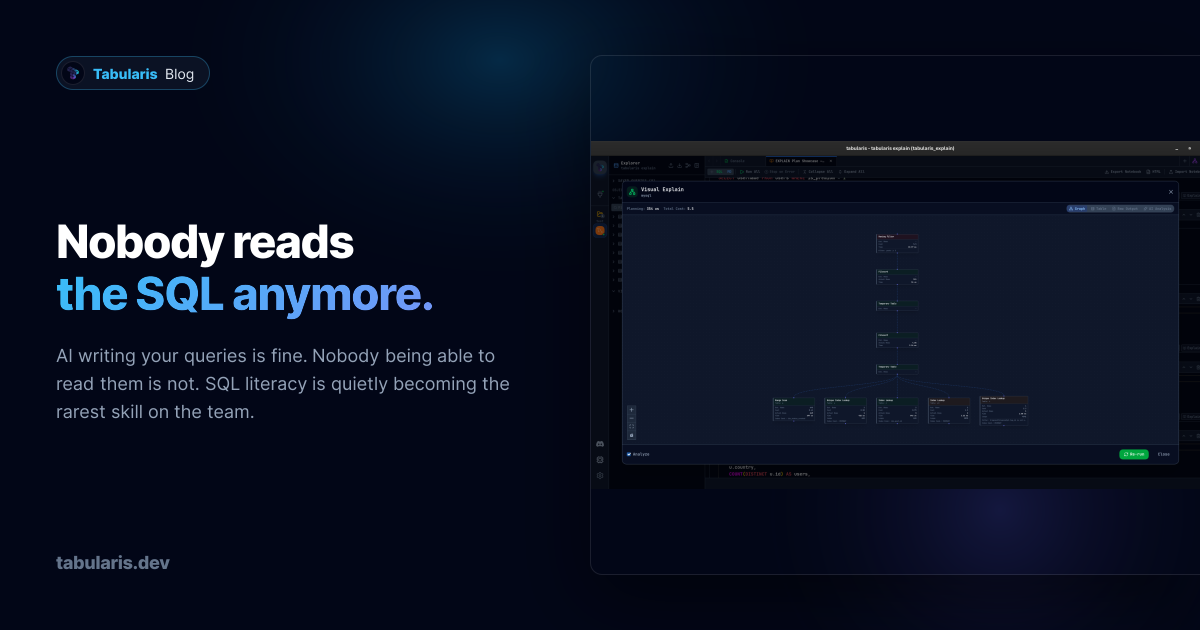
AI writing our queries is fine, and often better than fine. But reading skill was funded by writing, and now that the writing is gone, the reading is decaying while the volume of SQL entering our codebases goes up. Some thoughts on why SQL is the worst possible language for this to happen to.
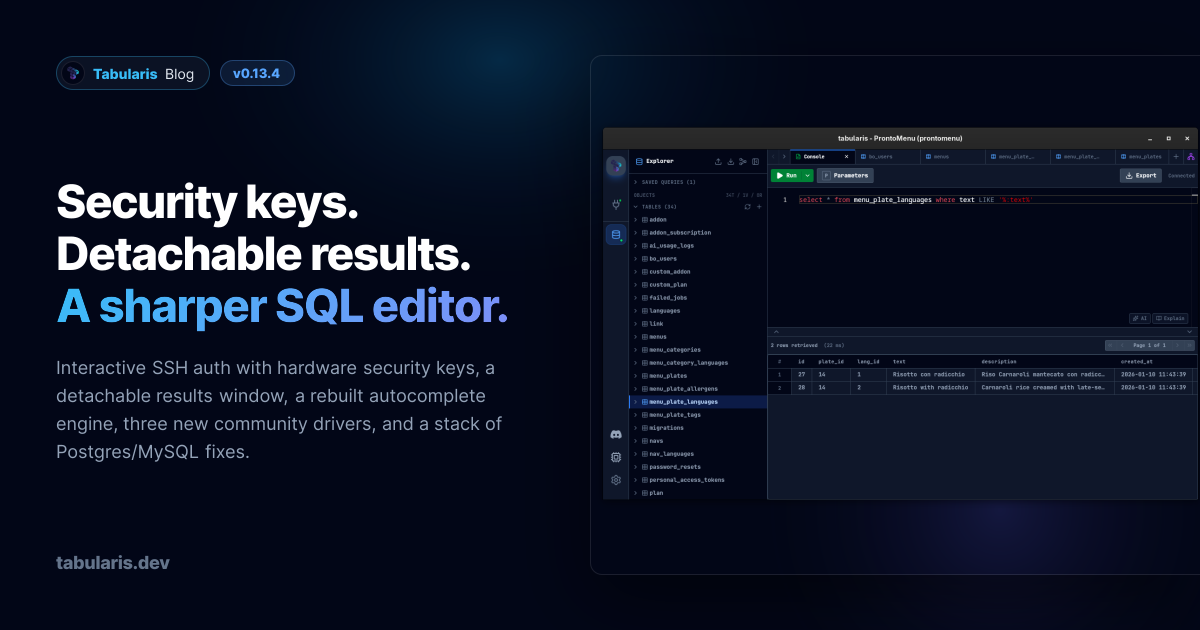
v0.13.4 teaches SSH to prompt — unlock a hardware security key or a passphrase from an in-app dialog — pops query results out into their own window, overhauls SQL autocomplete, and lands three new community drivers (MongoDB, Cloudflare D1, Dameng) alongside a wave of correctness fixes.
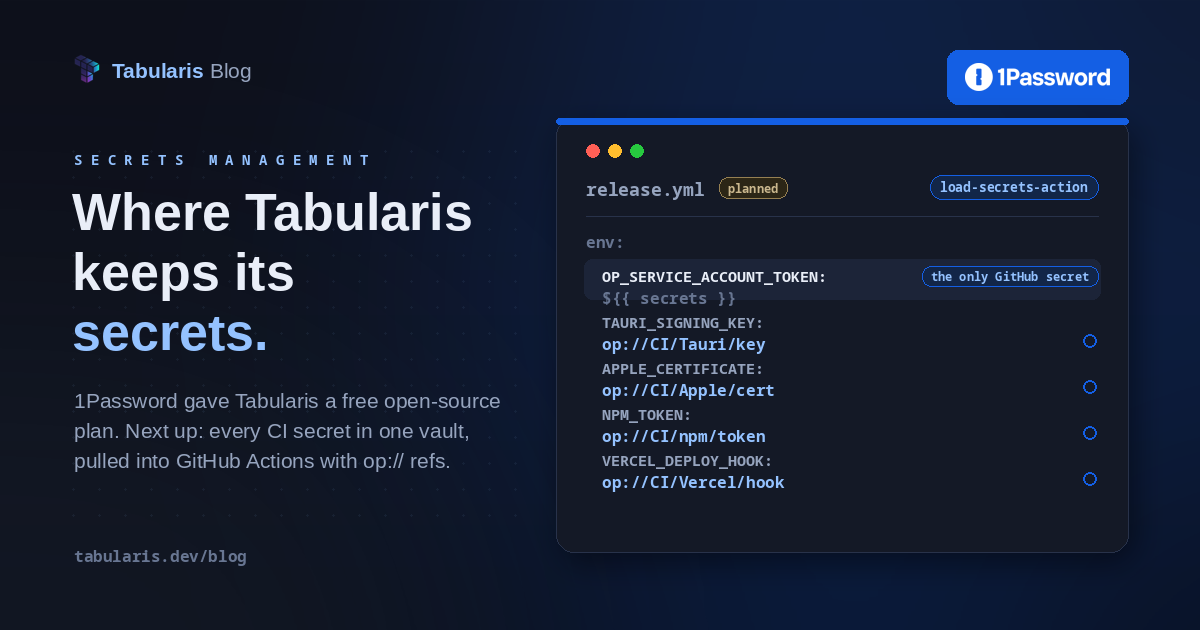
An open-source project accumulates secrets like signing keys, certificates and deploy tokens, and they end up pasted across GitHub repo settings with no real story for rotation or audit. 1Password gives open-source projects a free plan, we qualified for it, and it's good enough to deserve a genuine thank-you. Here's why 1Password is a great secret manager for developers, and how we plan to move Tabularis' CI secrets into one vault and pull them into GitHub Actions with op:// references.
Get release notes, tips, and project updates. No spam, unsubscribe anytime.
Quick searches