13 posts tagged with #ai
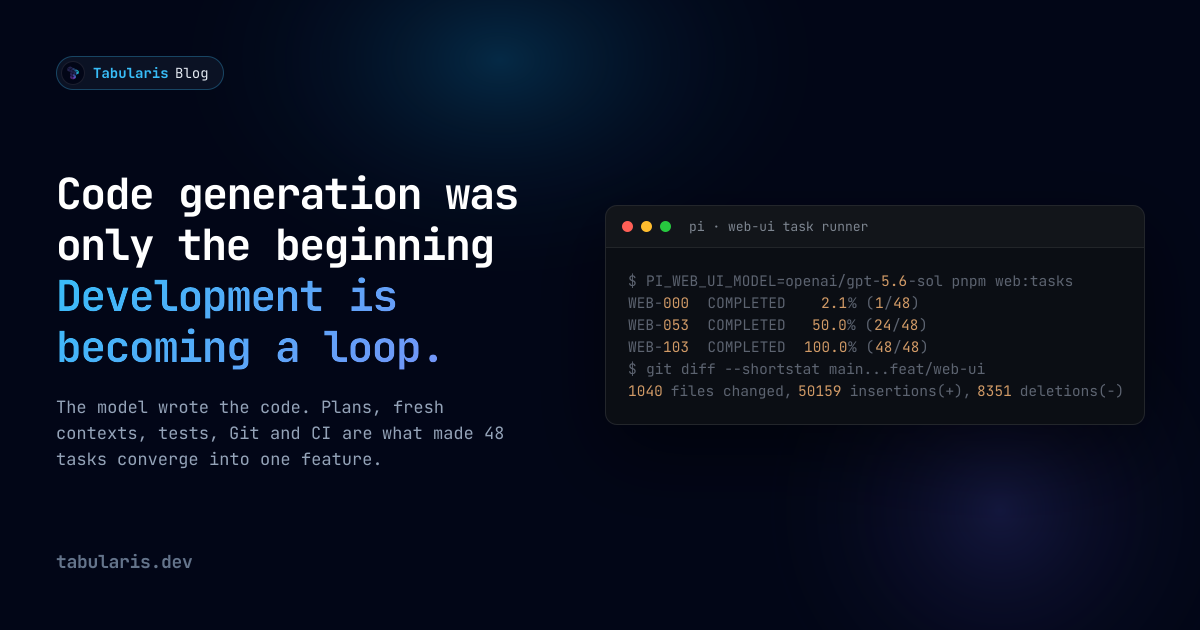
Tabularis Web touched 1,040 files and moved a desktop database client behind a second transport. This is how I managed it as 48 verified tasks, and why AI development is moving from prompts toward loops.
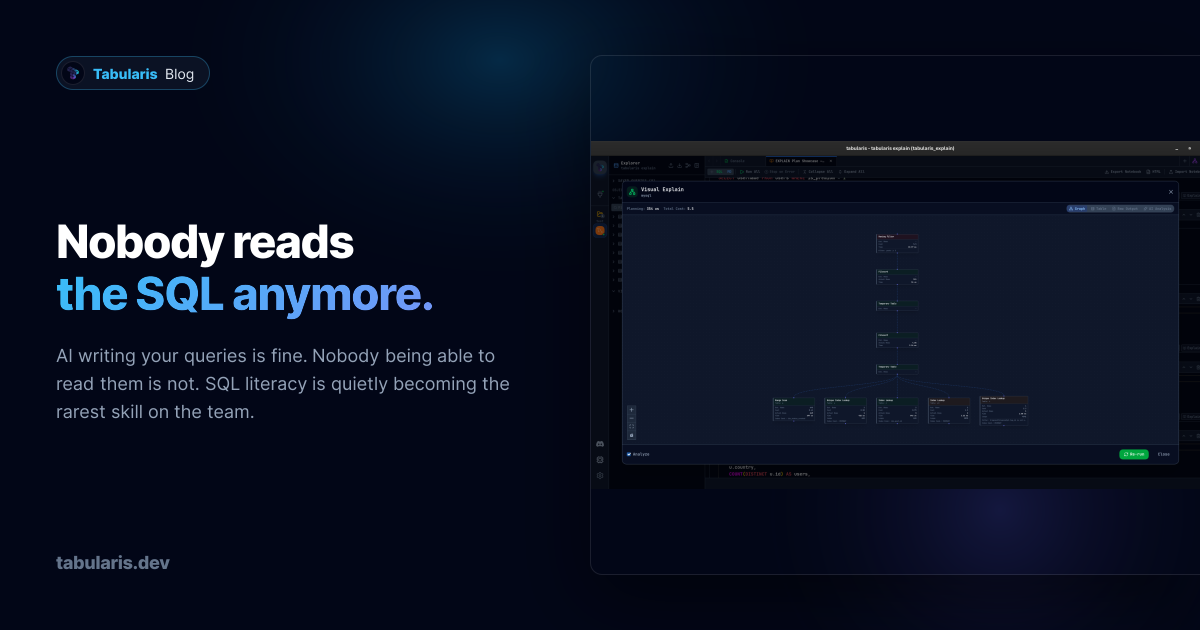
AI writing our queries is fine, and often better than fine. But reading skill was funded by writing, and now that the writing is gone, the reading is decaying while the volume of SQL entering our codebases goes up. Some thoughts on why SQL is the worst possible language for this to happen to.
A Tabularis dev experiment: we asked Fable 5 to add a CLI to the app and went to make coffee. We came back to a draft PR — 1,800 lines of Rust, 37 tests, a refactor we'd have done ourselves, and two pre-existing bugs quietly fixed.
v0.13.1 is a correctness pass on v0.13.0: macOS builds are now code-signed and notarized, the Postgres Explain Plan that never worked now runs, paginated queries stop dropping your OFFSET, postgresql:// and mariadb:// connection strings are accepted, the MCP read-only gate stops misreading a parenthesized SELECT as a write, the grid no longer freezes on giant JSON cells, and the macOS Keychain stops prompting on every AI-tab open.
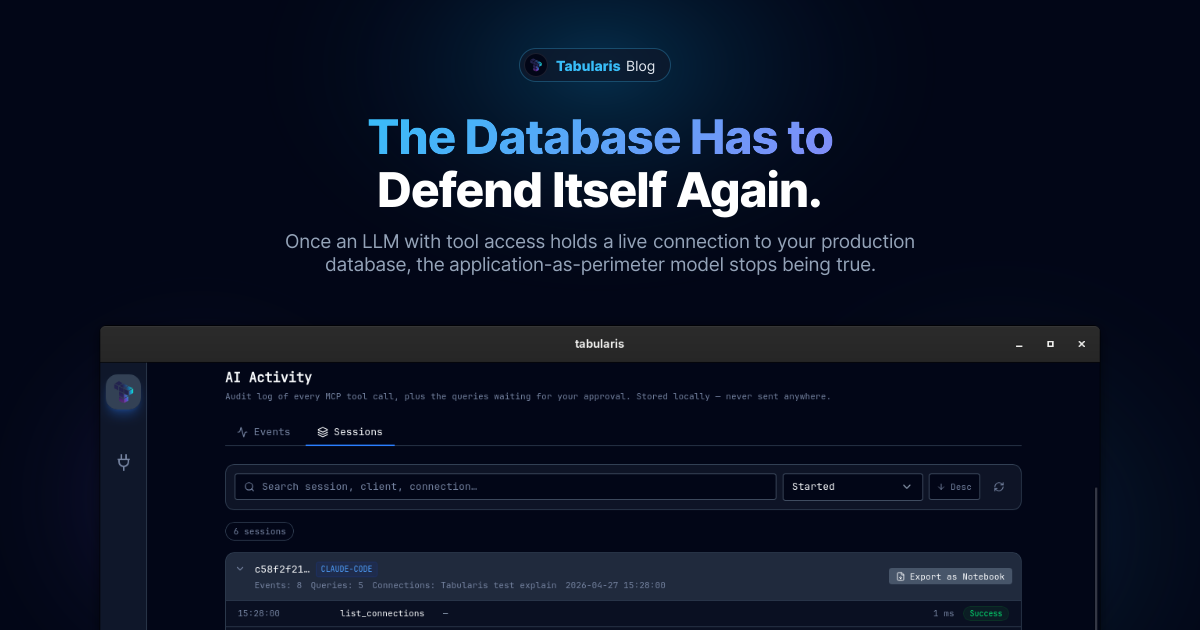
For two decades the database could outsource trust to the application layer. Once an LLM with tool access holds a live connection to production, that proxy is gone — the database has to defend itself again.
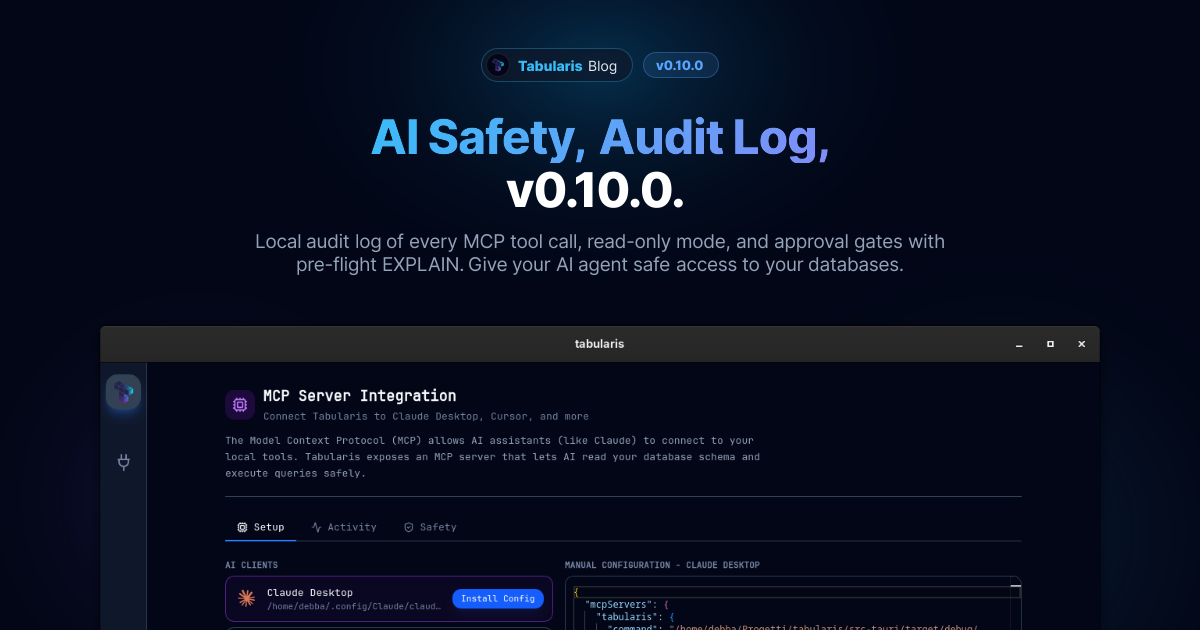
v0.10.0 ships an AI audit log, MCP read-only mode, and approval gates with pre-flight EXPLAIN preview. Built around a 200-line file-queue between two processes.
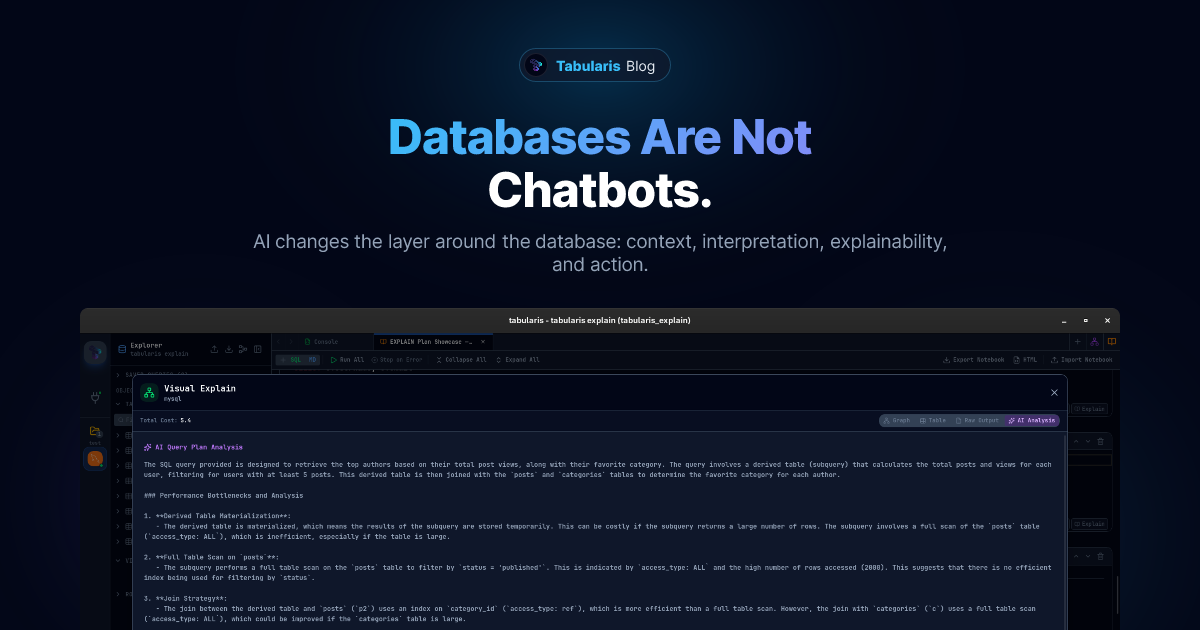
AI is not replacing databases. What is changing is the layer around them: context, interpretation, explainability, notebooks, agents, and the workflows that connect them.
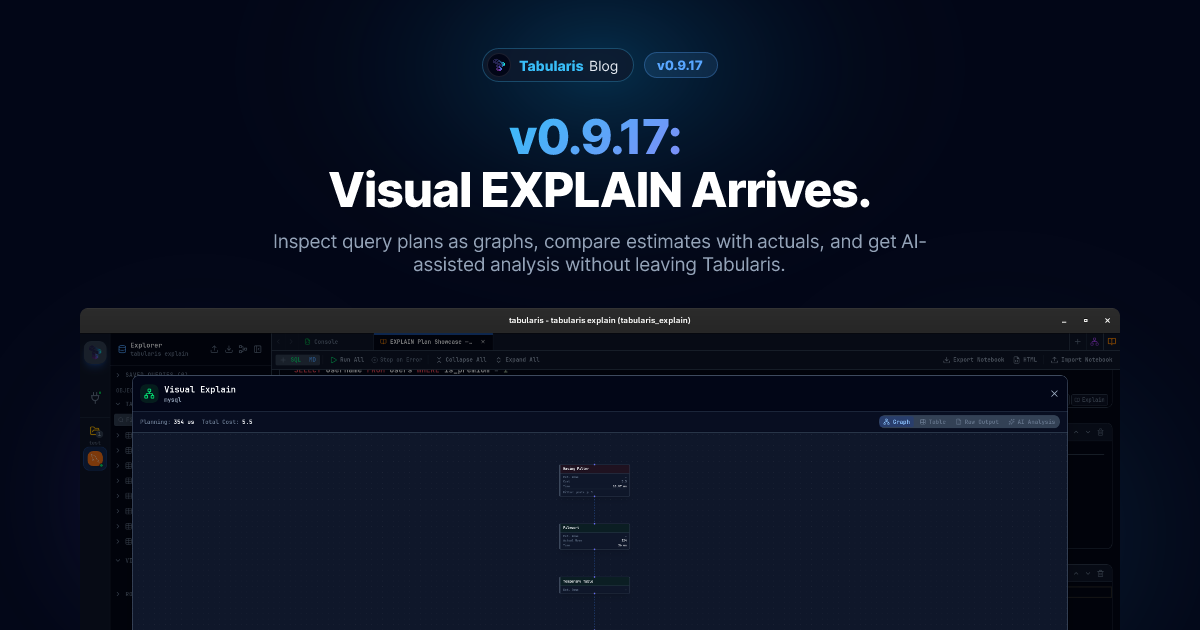
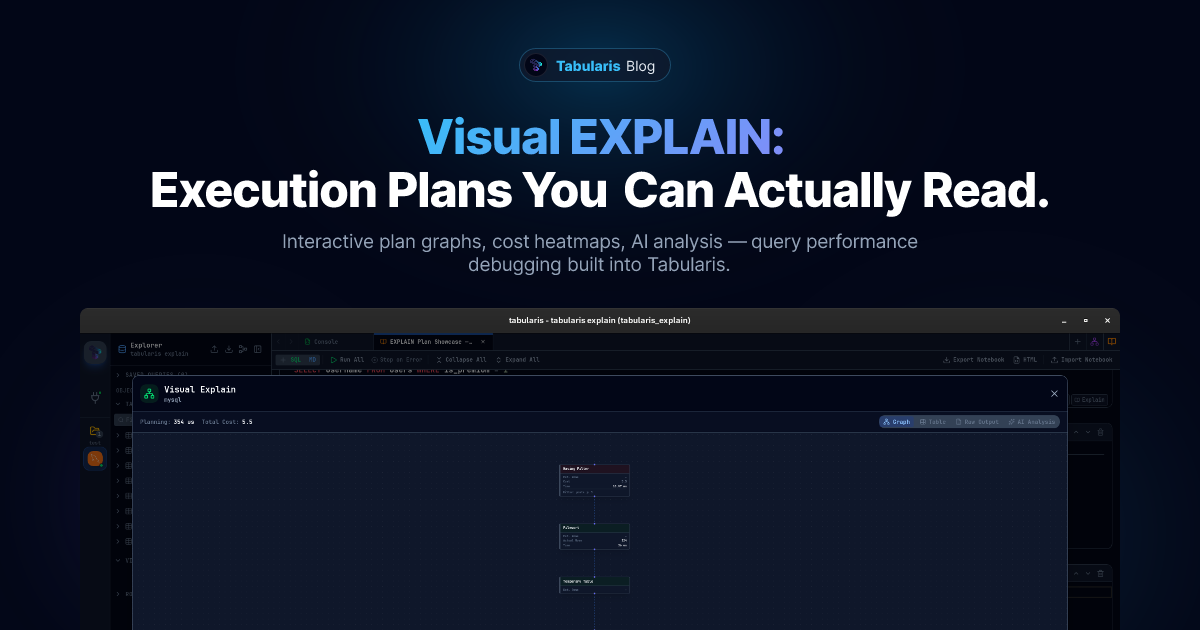
v0.9.17 brings Visual EXPLAIN to Tabularis: interactive execution plan graphs, table and raw views, AI-assisted analysis, and cross-database support for PostgreSQL, MySQL, MariaDB, and SQLite.
A preview of Visual EXPLAIN in Tabularis — interactive execution plan graphs, tabular breakdowns, raw JSON output, and AI-powered analysis. Works with PostgreSQL, MySQL, MariaDB, and SQLite. Still in development, with PostgreSQL as the primary focus.
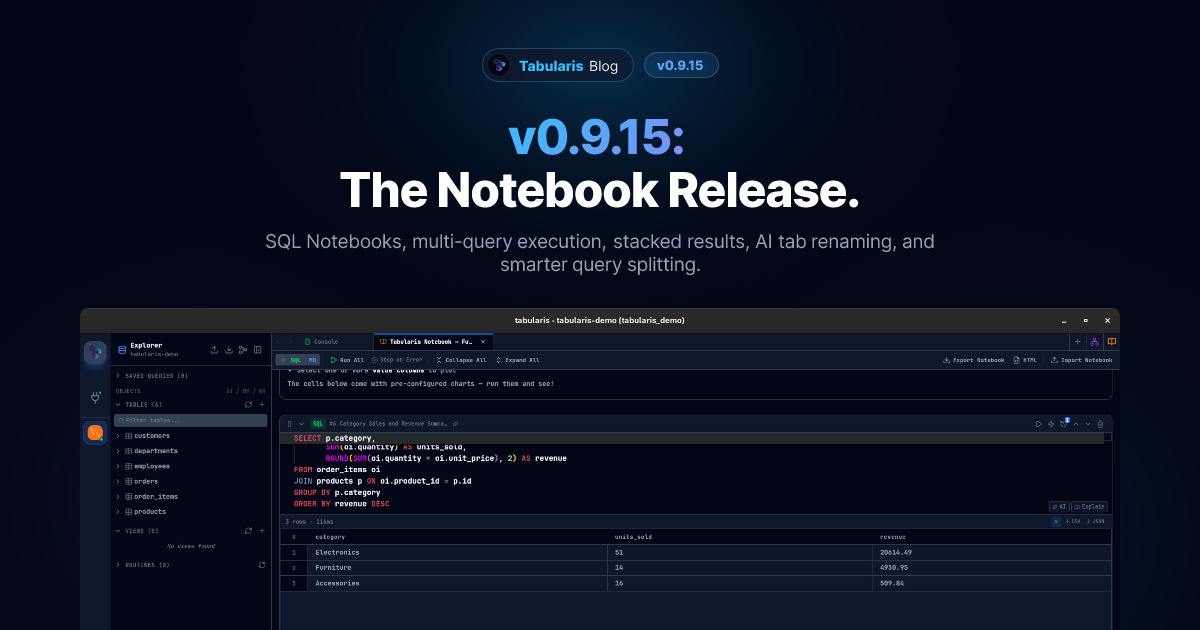
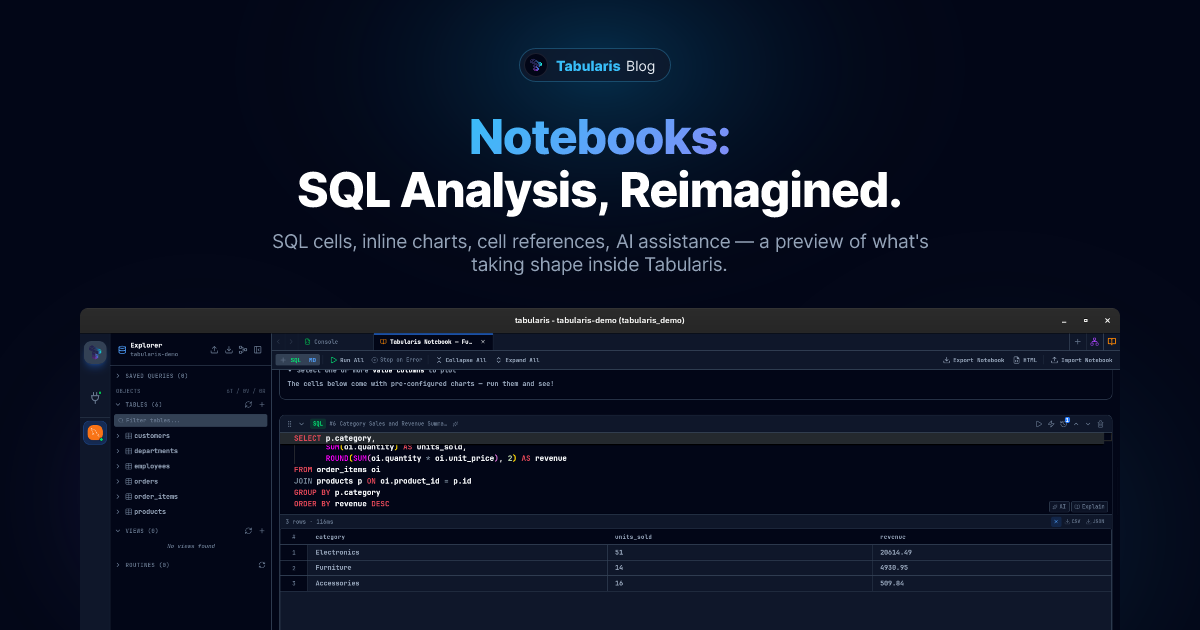
SQL Notebooks land with cell references, inline charts, parameters, AI naming, and HTML export. The query editor gains multi-query execution with tabbed and stacked results, AI-powered tab renaming, and query splitting gets a proper parser.
A look at what's coming: a full notebook environment inside Tabularis — SQL and markdown cells, inline charts, cell references, parameters, parallel execution, and AI assistance. Still in development, but the shape is clear.
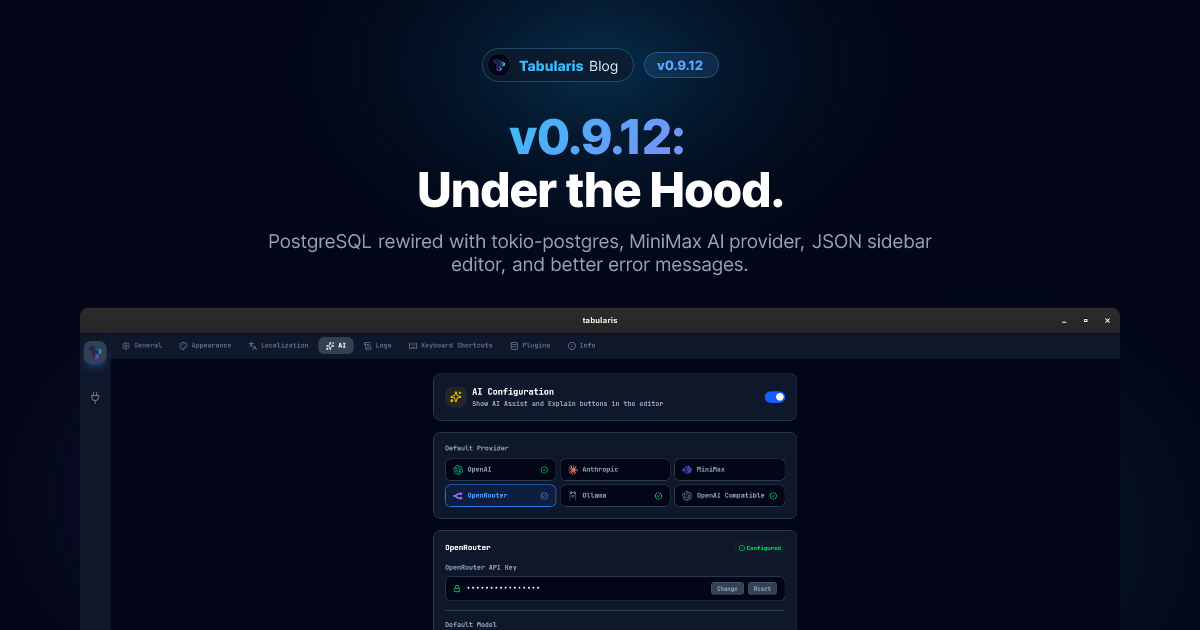
The PostgreSQL driver switches from sqlx to tokio-postgres, MiniMax joins the AI providers, JSON columns get a proper editor, and error messages stop being cryptic.
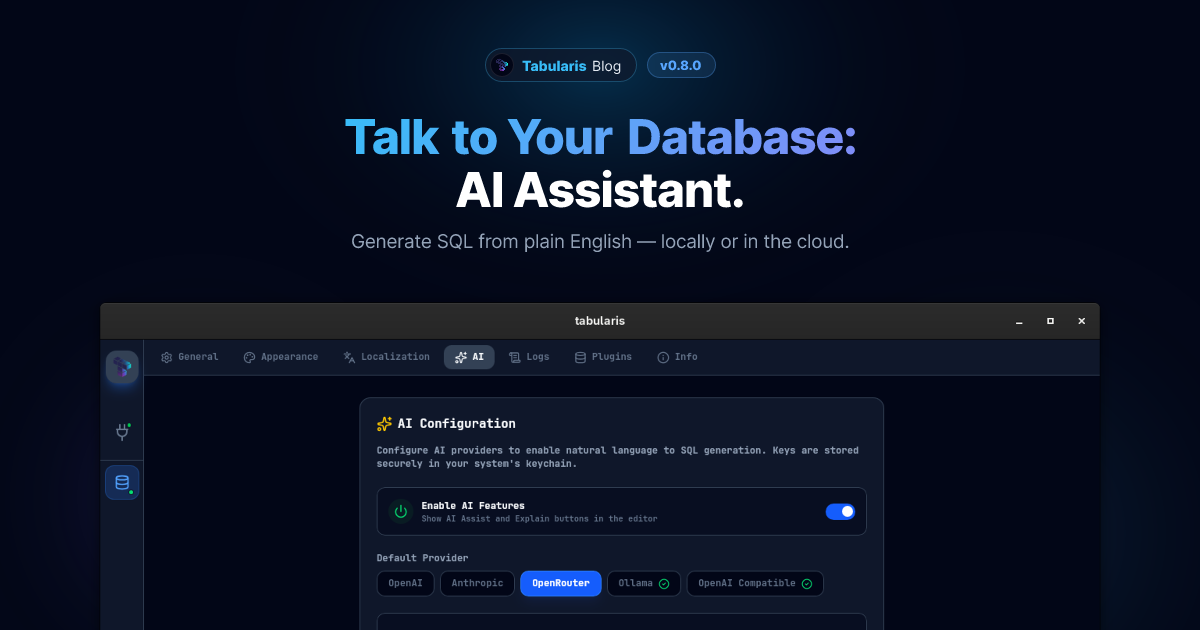
Sometimes you know what you want but not exactly how to write the SQL. v0.8.0 brings an AI assistant that generates queries from plain English — locally or in the cloud.
Get release notes, tips, and project updates. No spam, unsubscribe anytime.
Quick searches