6 posts tagged with #deep-dive
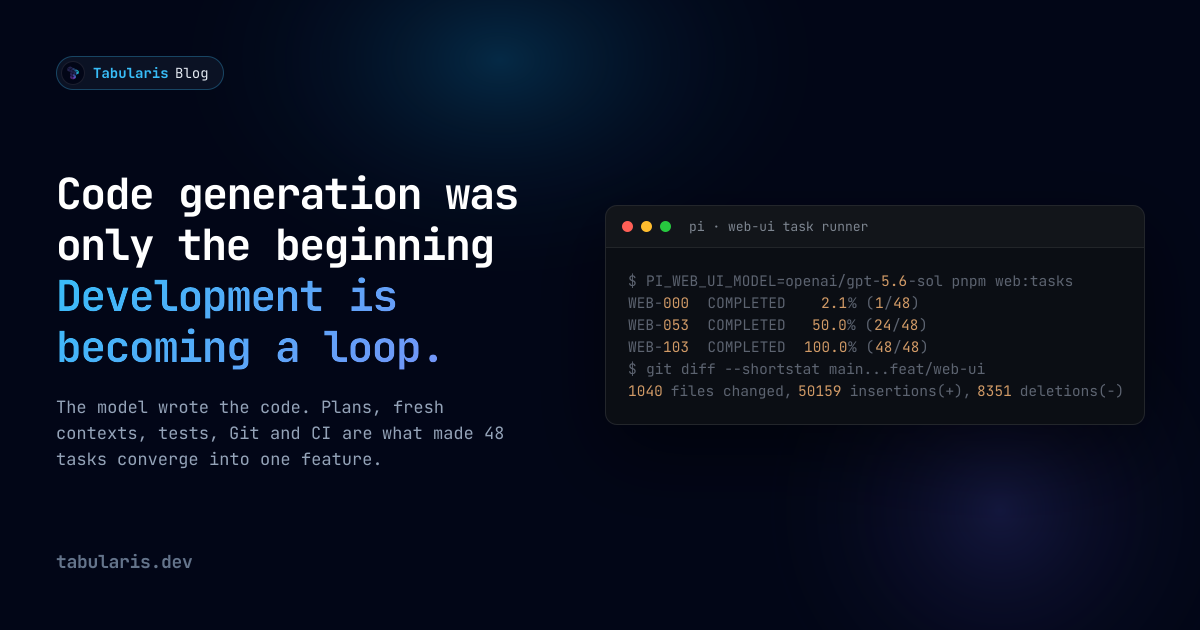
Tabularis Web touched 1,040 files and moved a desktop database client behind a second transport. This is how I managed it as 48 verified tasks, and why AI development is moving from prompts toward loops.
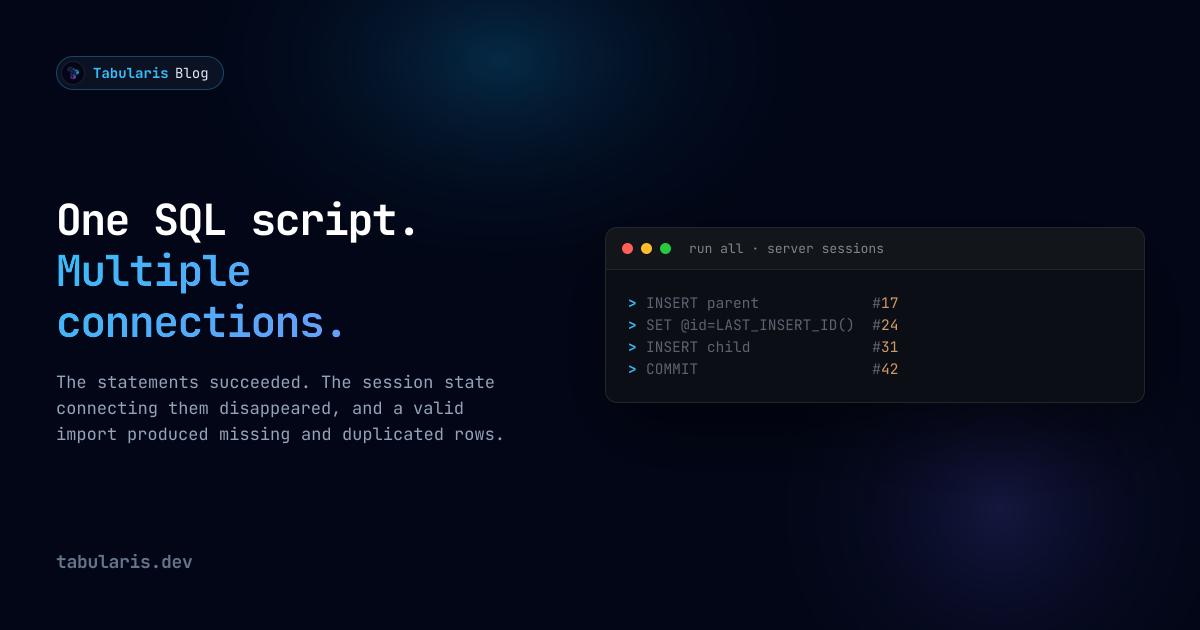
Run All looked like a UI feature. Underneath, it fanned one SQL script into parallel pool checkouts. The statements succeeded, the session state disappeared, and a parent-child import silently produced missing and duplicated rows.
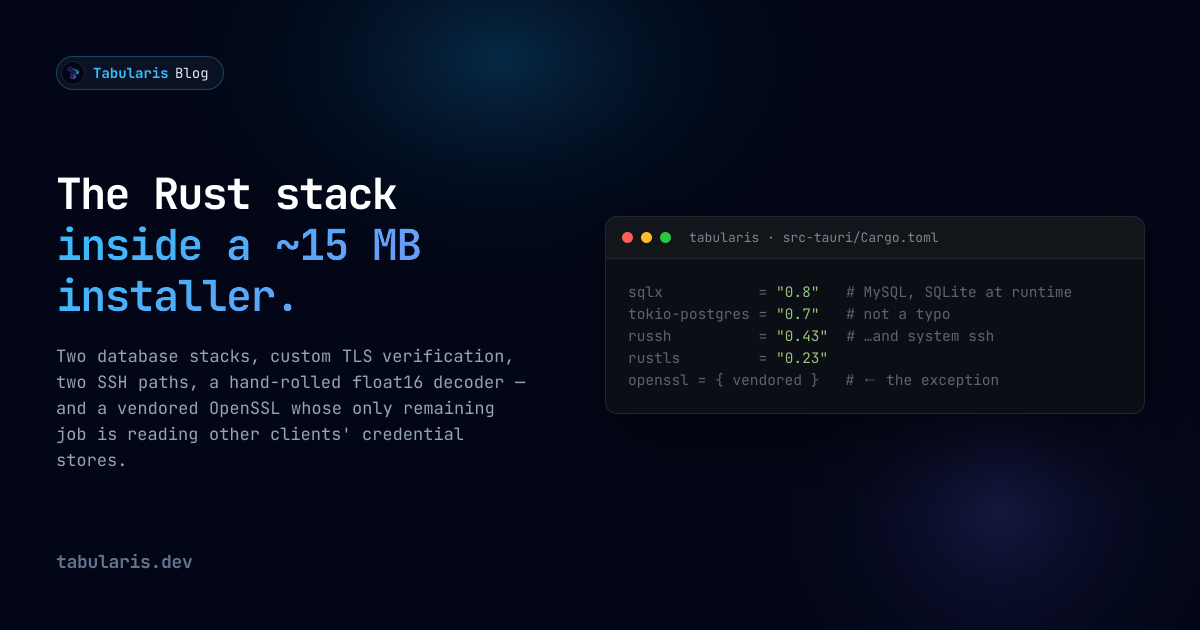
Two database stacks, several TLS verification paths, two SSH clients, a hand-written float16 decoder, and the vendored OpenSSL that refuses to leave: a guided tour of the fifty-odd top-level Rust dependencies behind Tabularis's compact installers — the other half of last week's Tauri story.
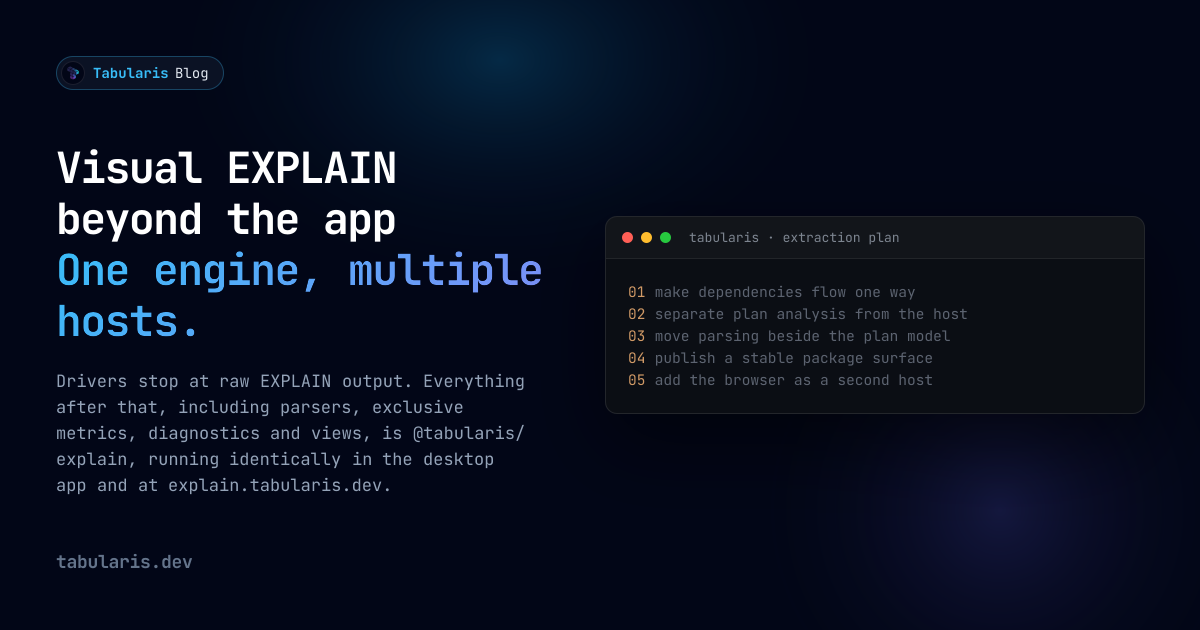
Visual EXPLAIN began inside the desktop app. Extracting it produced an npm package and an online visualiser, but also a public API, two release schedules, and a repository question I have not answered yet.
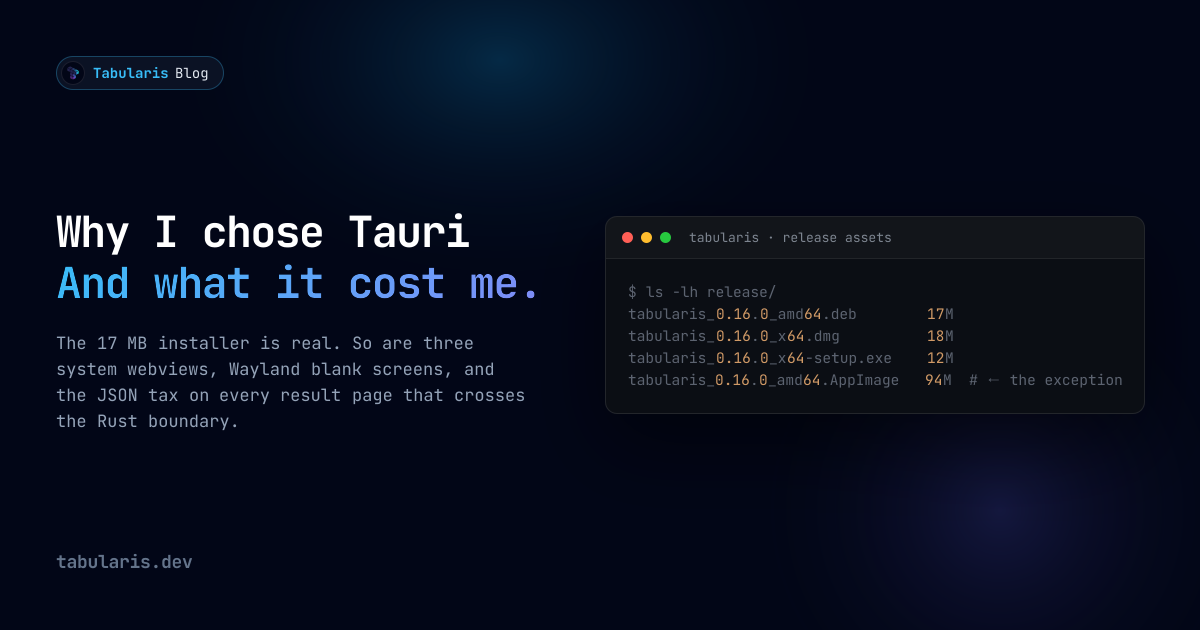
A database client is a systems program with a UI problem. That is why I chose Tauri over Electron and native. After six months and 64 releases, here is the part the framework comparison charts leave out.
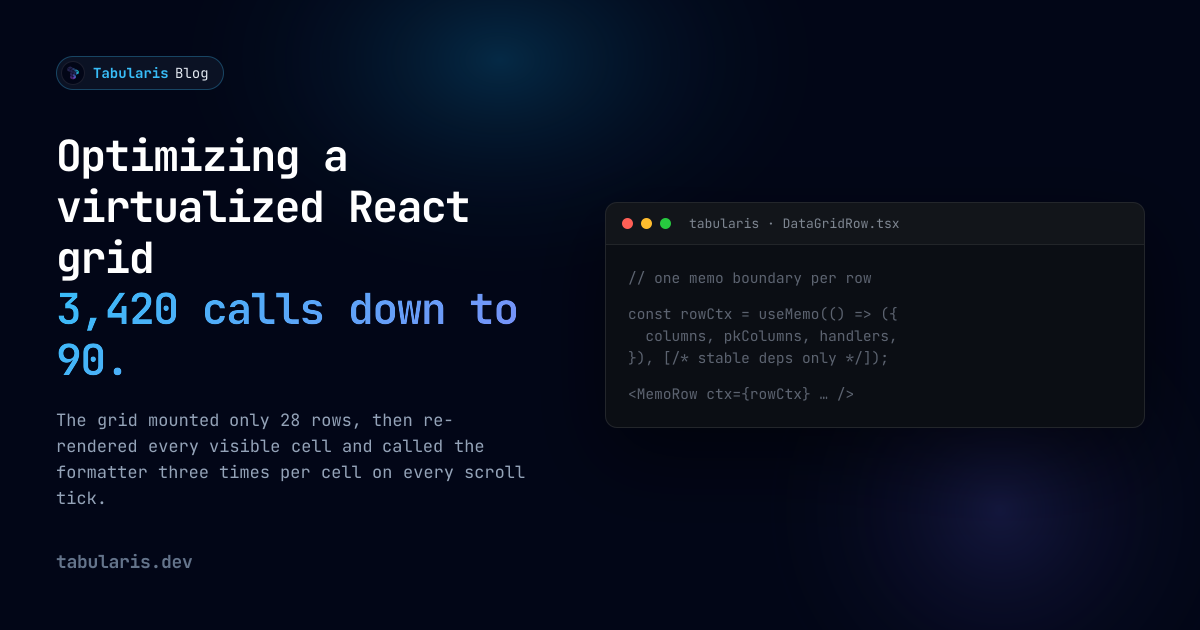
The Tabularis data grid was already virtualized, but wide tables still took 29 ms of React render work per scroll tick. The bottleneck was the visible rows, not the total row count.
Get release notes, tips, and project updates. No spam, unsubscribe anytime.
Quick searches